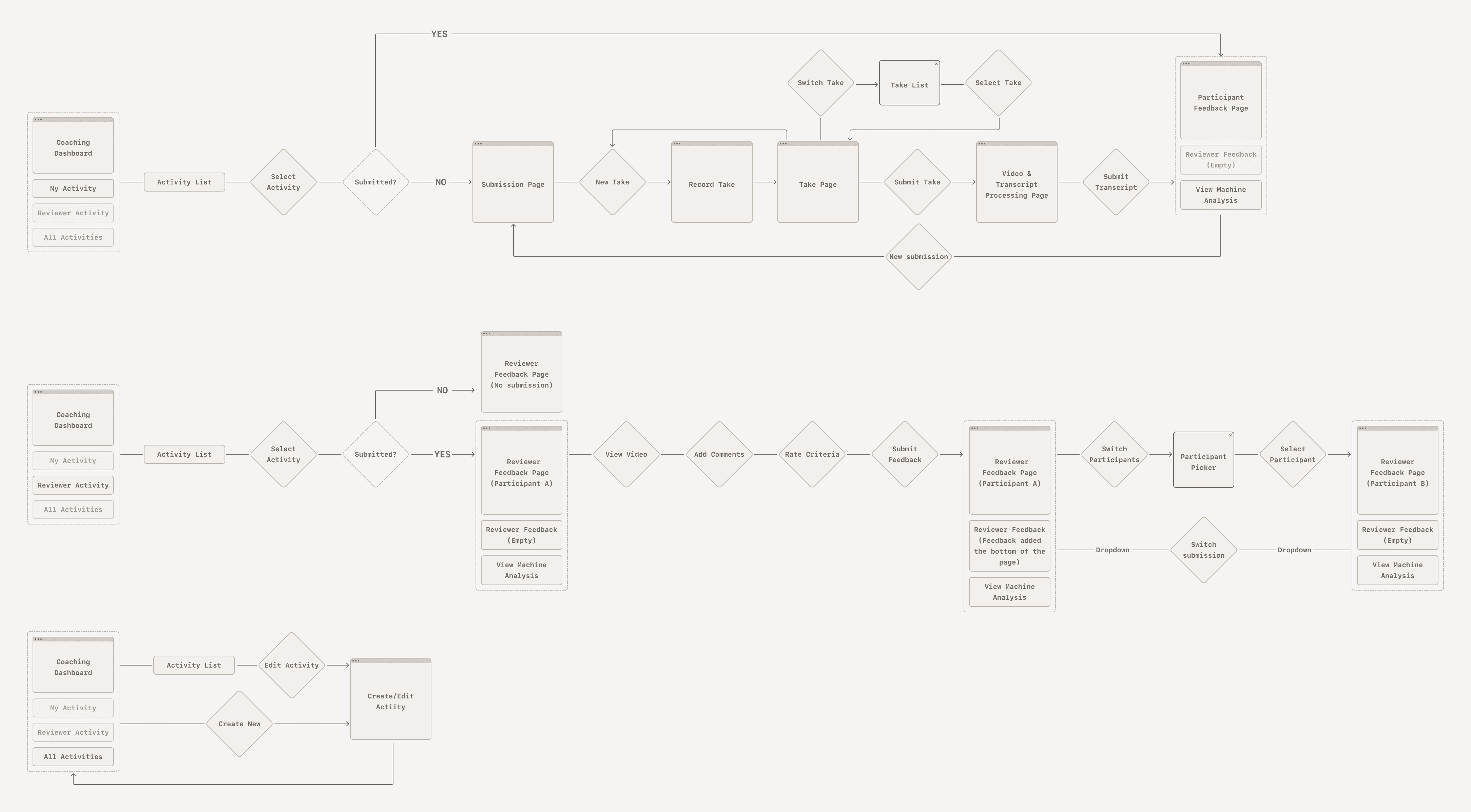
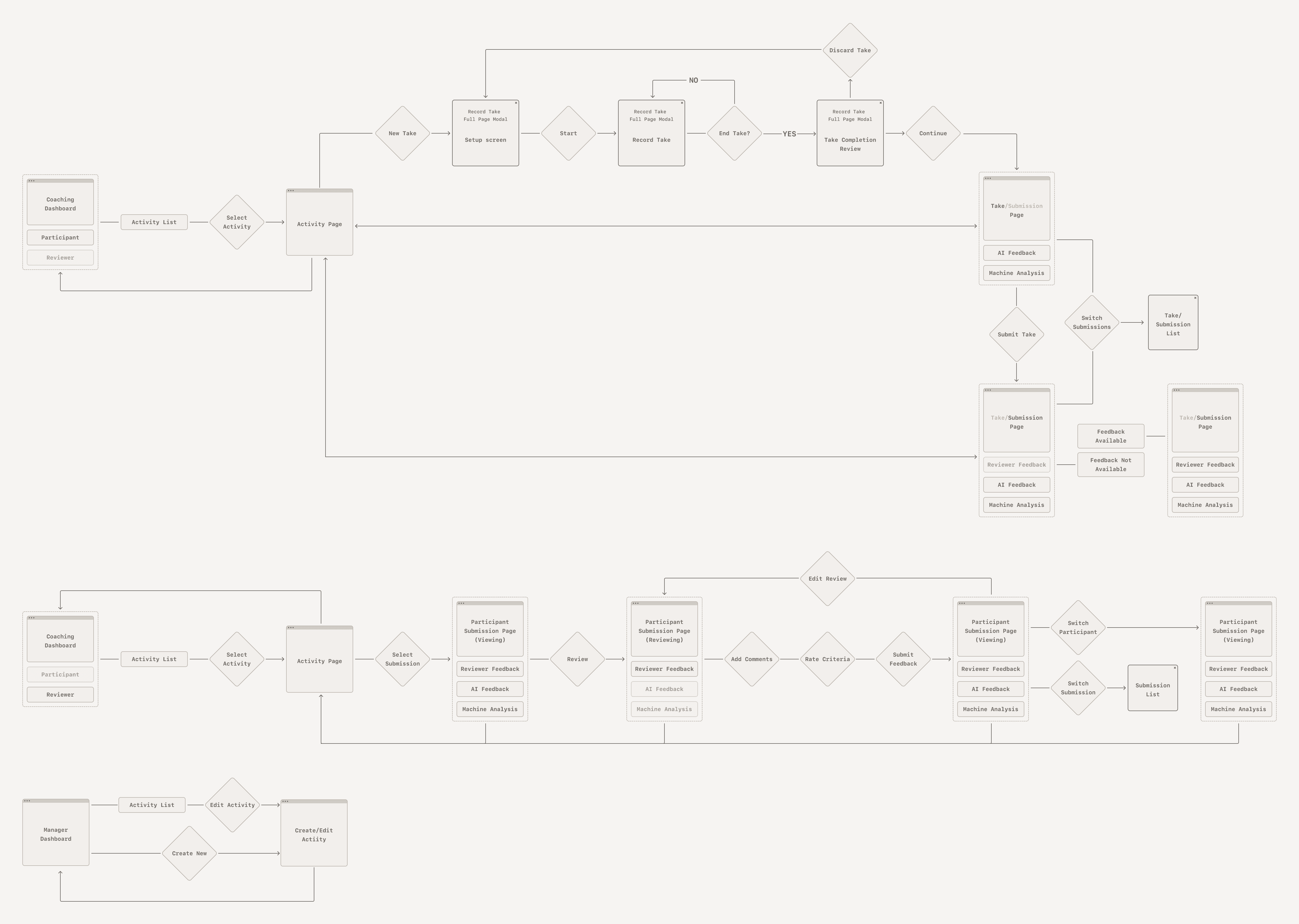
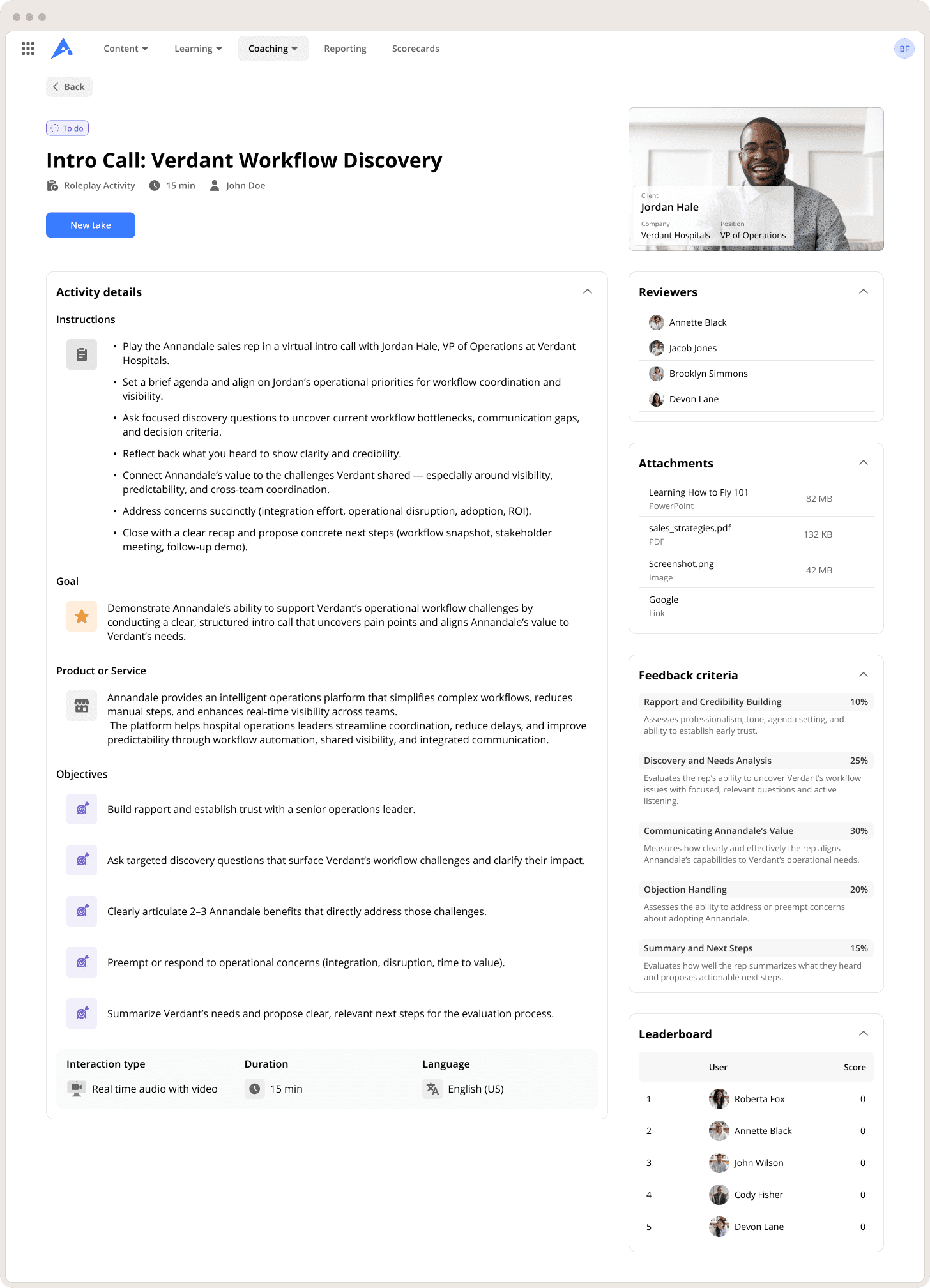
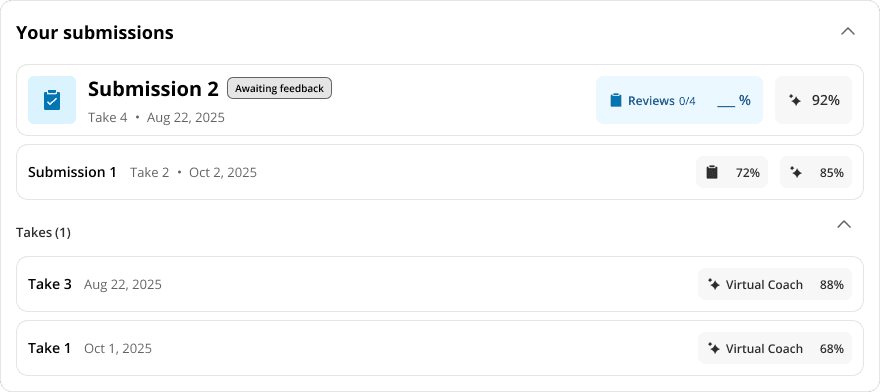
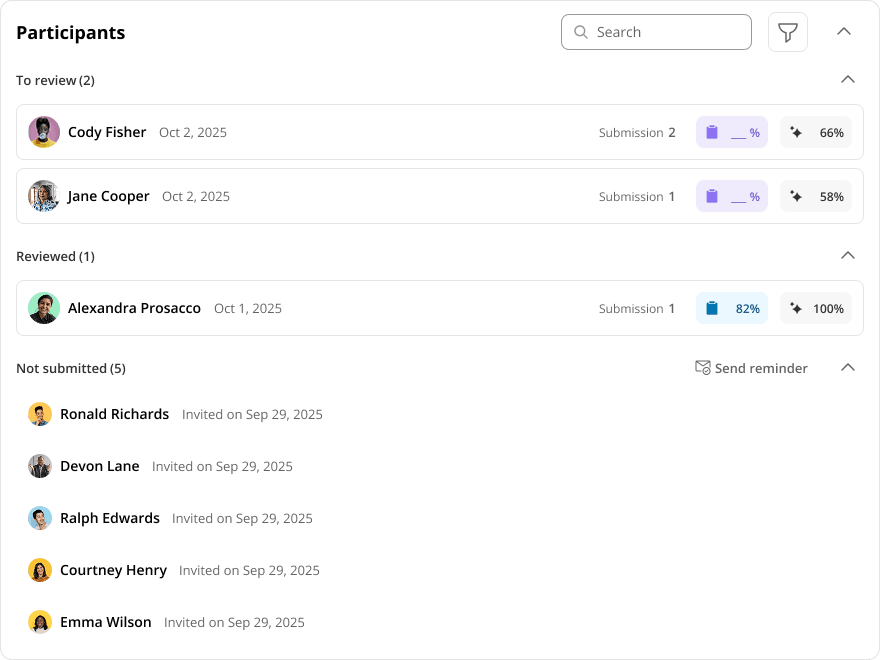
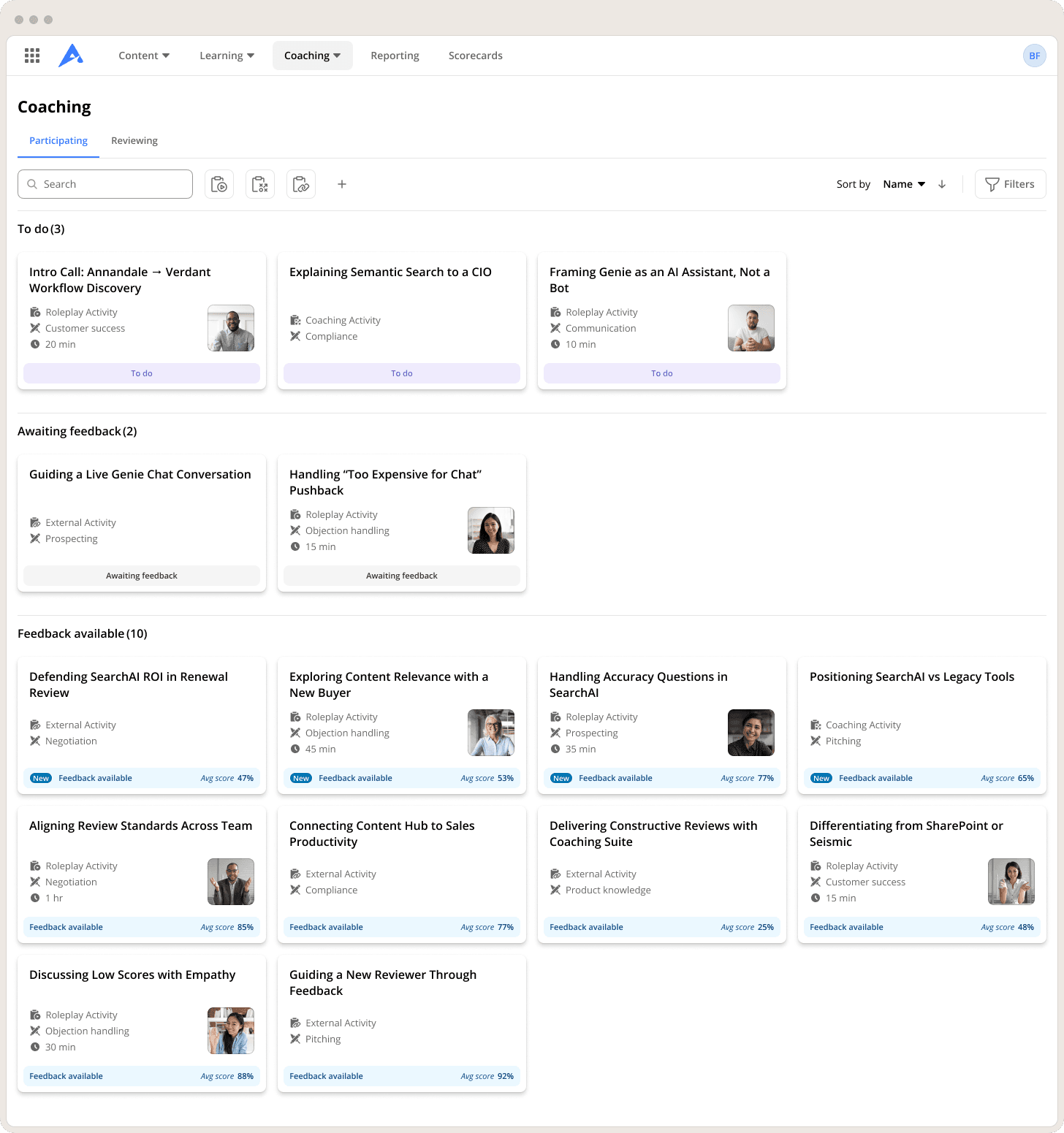
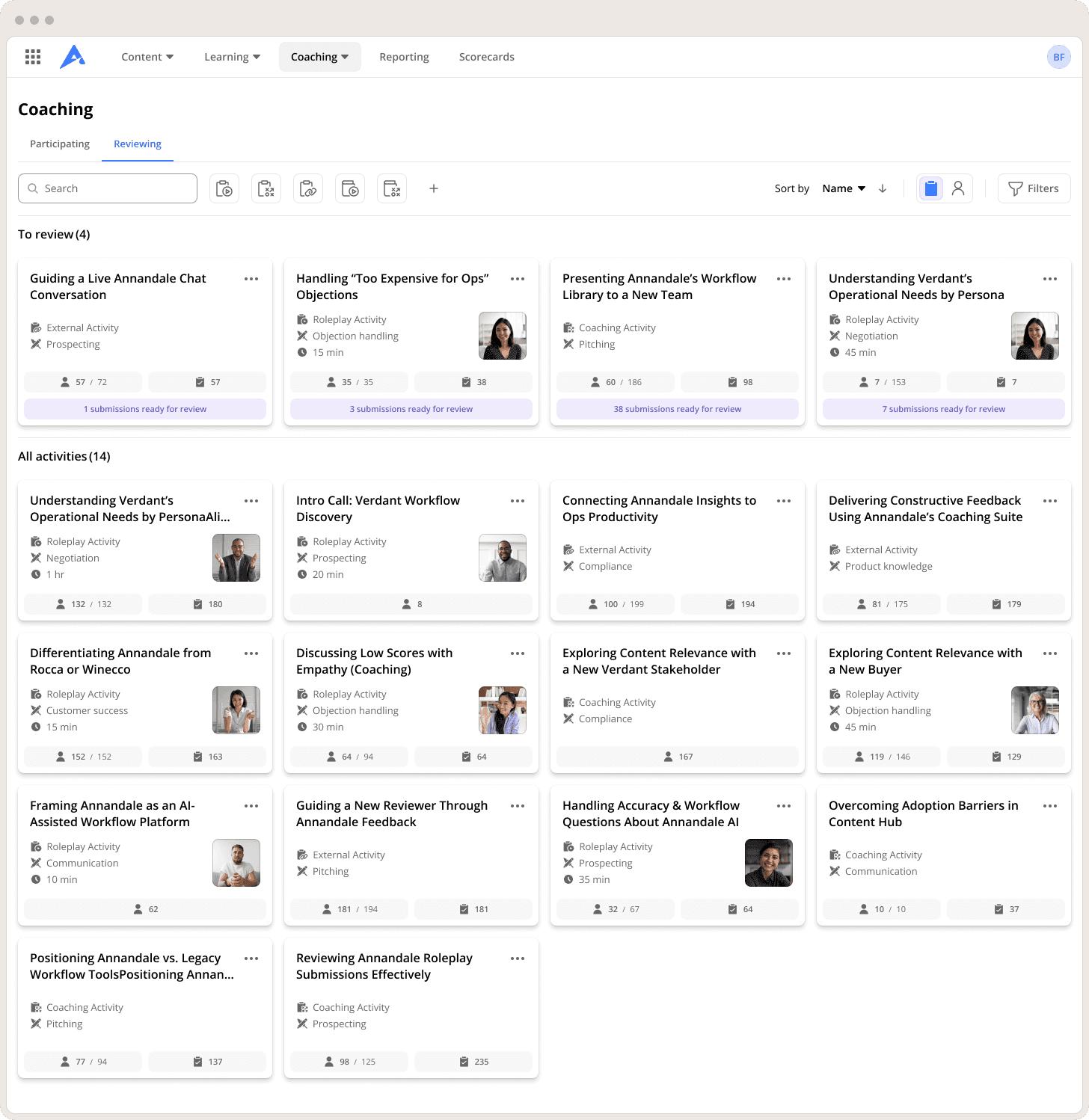
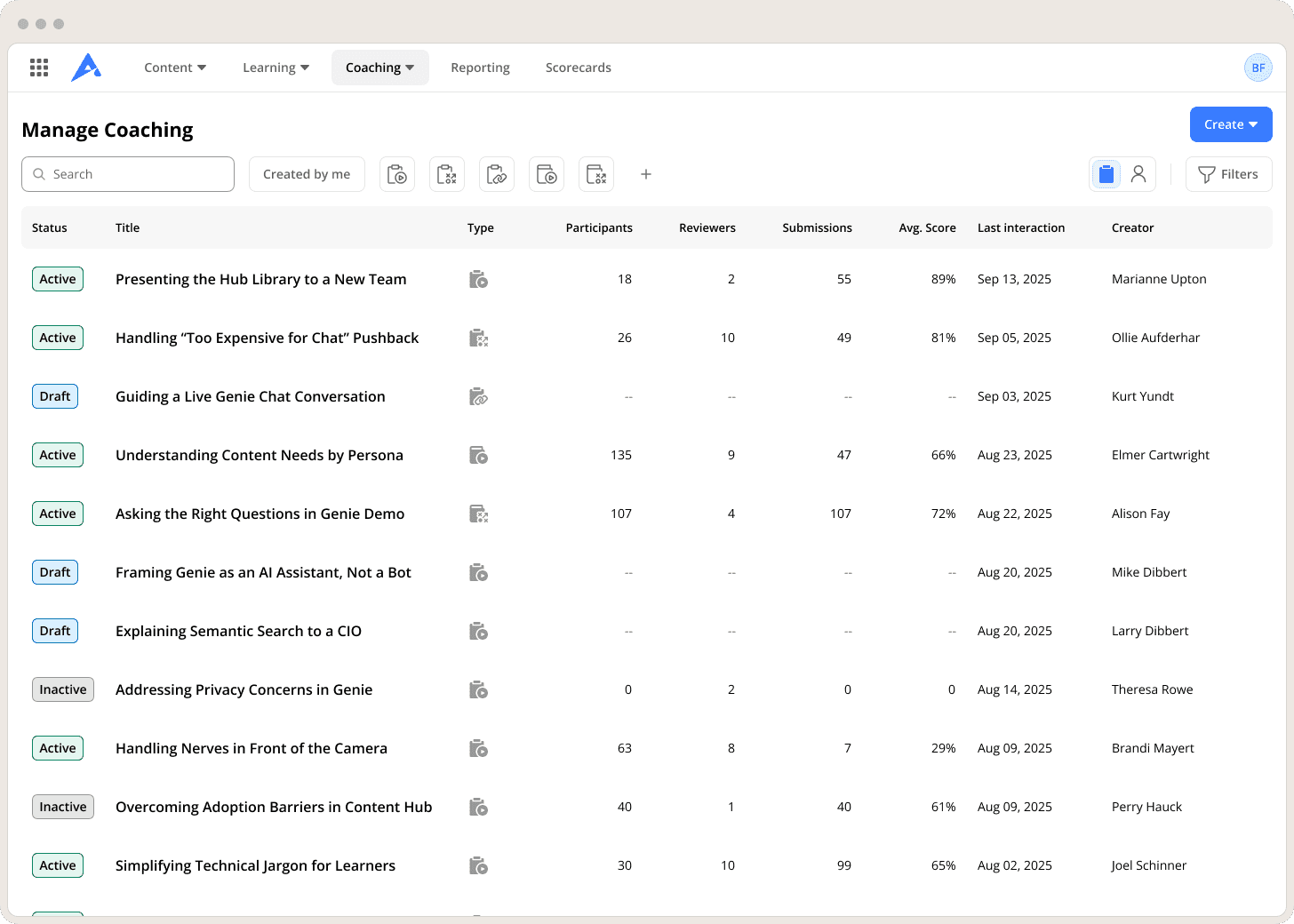
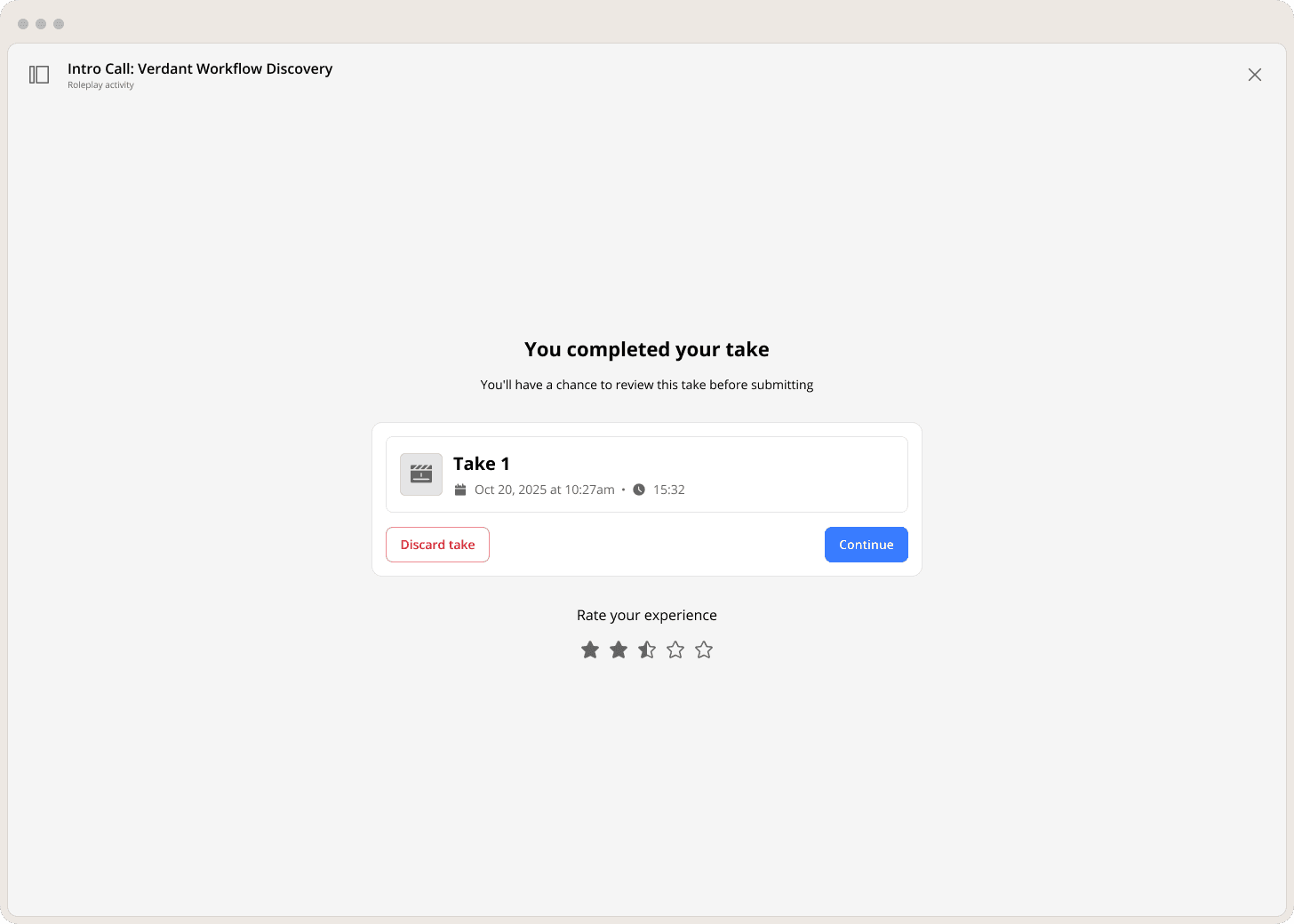
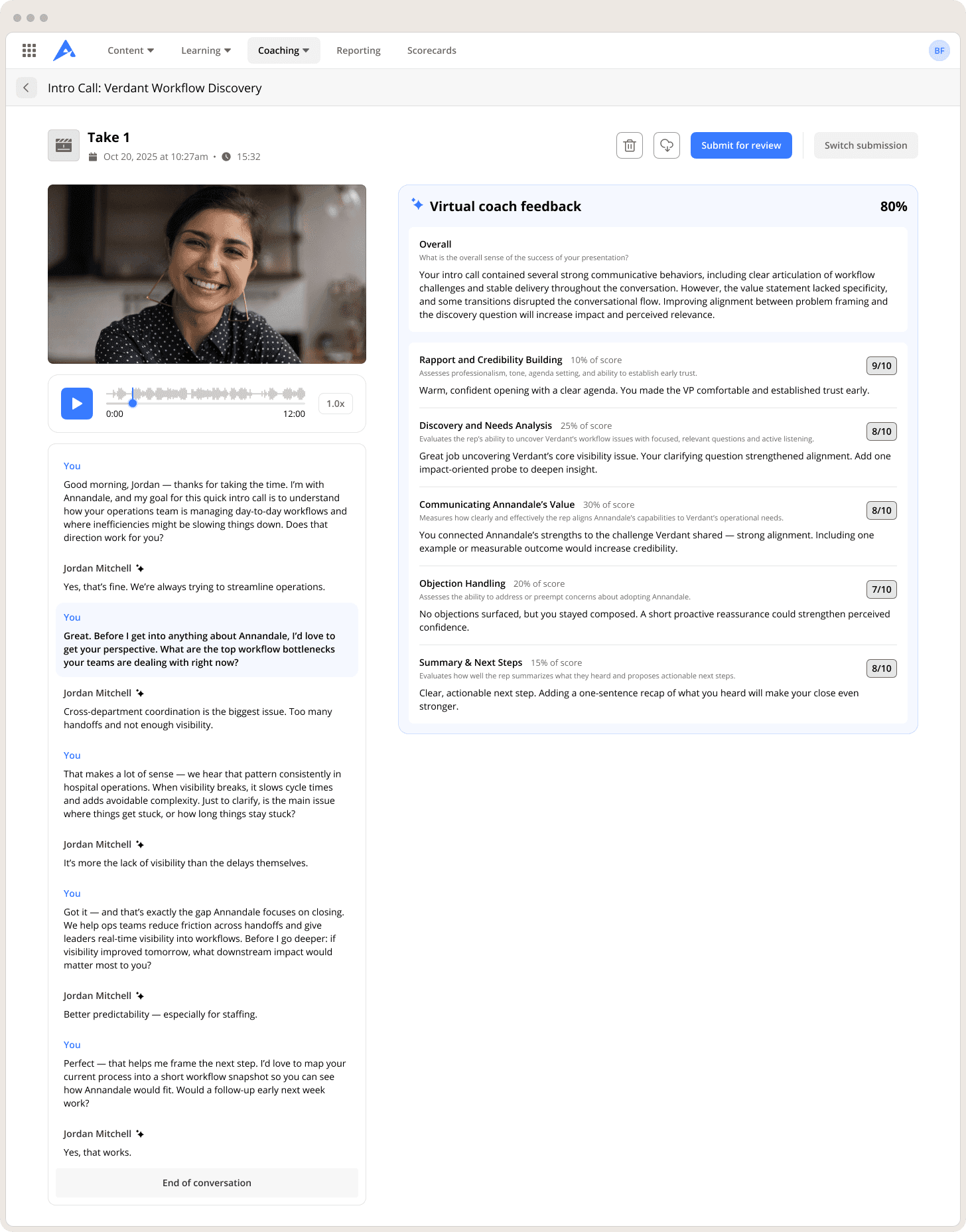
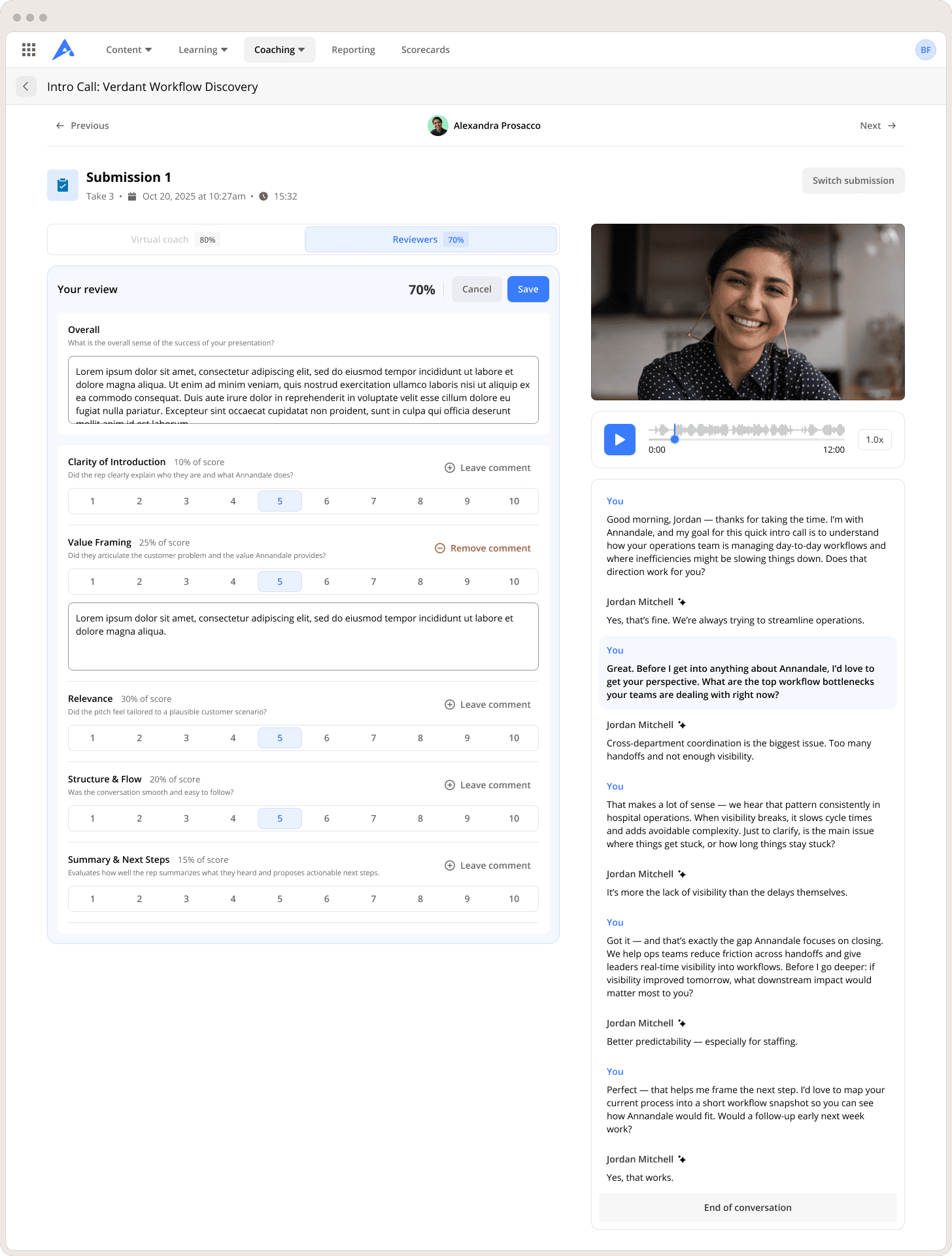
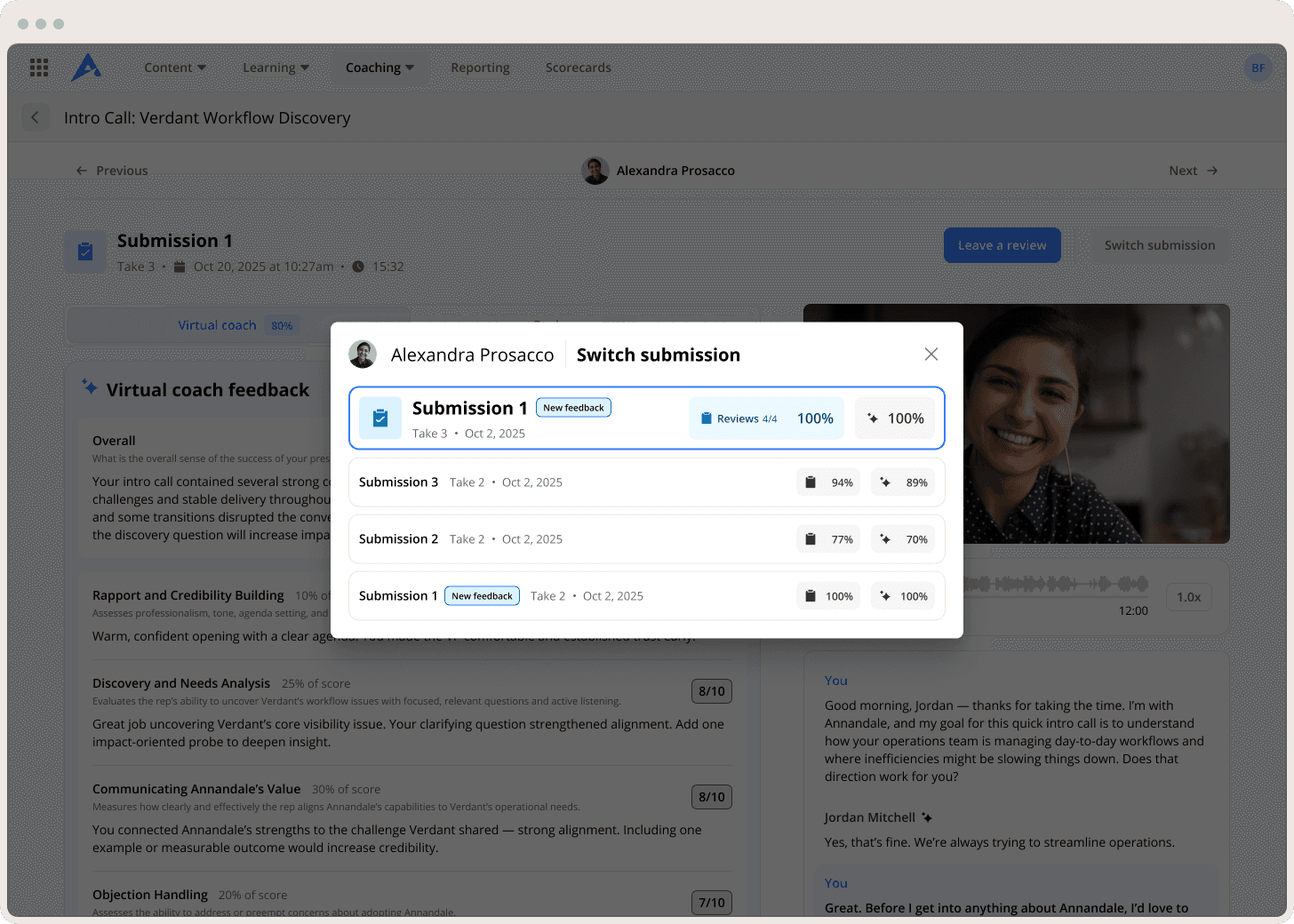
Rather than arriving fully formed, the structure emerged through the work.
Phase 1 and Phase 2 focused on stabilizing and clarifying the legacy flows — surfacing context, reducing friction, introducing early practice patterns, and adding Roleplay AI — even though the underlying structure couldn’t yet change.
Instead of pursuing a risky backend rebuild, we expressed structure through design: reshaping surfaces, states, and transitions so the workflow felt more predictable within legacy constraints.
As friction decreased, a clearer sequence began to surface:
Understand expectations → attempt → review → iterate
By Phase 3, we were able to define that sequence explicitly. It became the organizing principle for what needed to be visible upfront, what belonged together, and how different roles should experience the same activity.
With targeted backend changes, Coaching shifted from rigid, state-driven flows into a system people could actually reason about.